Matter
1.What You Know about Matter
A litre of one sample will not have the same mass as a litre of the other, because the samples have different densities.
Properties such as color and taste describe matter specifically and can be used to identify matter.
The temperature at which matter changes from a liquid to a gas, its boiling point, is still another property that can be used to identify matter and distinguish one kind from another.
2.Purifying Matter
mixture---two or more kinds of matter that have separate identities. Matter that is easily separated into component parts is called a mixture or said to be impure.Tricky: Deciding which samples can be separted and which samples cannot.
Mixtures that look uniform throughour and do not scatter light are called solutions.
Solutions like salt water and sugar water can be separated into their component parts using a procedure called distillation.
Much of the recent awareness of air pollution, water pollution, carcinogens in foods, and similar environmental concerns have come about because new and better techniques have been found to detect those impurities.
3.Characteristics of Pure Substances
Mixtures never have a constant boiling point, but a few do.
Similar differences between mixtures and pure substances are observed when they freeze.
The temperature at which a liquid changes to a solid is called its freezing point. The freezing point is the same as the melting point, the temperature at which a solid becomes a liquid.
As time passes, the temperature of the water drops as heat is radiated to the air, and the temperature of the paradichlorobenzene drops as it loses heat to the water. The paradichlorobenzene continues to lose heat to the water when it freezes, but the temperature does not drop any further until all of it has changed from a liquid to a solid. When a mixture of paradichlorobenzene and naphthalene is cooled in water. However, when the mixture freezes, the temperature continues to fall.
4.Chemical and Physical Changes
Changes that produce a new kind of matter with different properties are called chemical changes. This particlar chemical change is called a decomposition because one kind of matter comes apart to form two or more kinds of matter.
Changes that are easily reversed to get the original material back again are described as physical changes. They do not appear to produce new kinds of matter.
5.Compounds and Elements
Electrolysis involves passing an electric current through a substance, causing it to decompose into new kinds of matter.
Decomposition of a pure substance and distillation of a mixture are both processes in which matter is separated into componenes, but in thinking about what happens you see that they are fundamentally different processes. In decomposition, a single, pure substance with constant characteristic properties is somehow changed into new substances with different properties. Decomposition represents a chemical change. In distillation, the separated components exist in the original mixture as separate substances. The properties of the muixture are a blend of the properties of the mixture. Distilltion is a physical change that separates two or more things that already exist.
6.Compounds Have a Definite Composition
Not all combinations of elements are compounds.
Law of definite composition and law of multiple proportions

Law of Definite Composition, Multiple Proportions; Heating/Cooling Curve; Matter
Law of Definite Composition
Compounds will have a definite composition.
Ex: H2O will be H2O anywhere.
Law of Multiple Proportions
When two or more compounds with different proportions of the same element can be made.
Ex:CO2(carbon dioxide) --X2--> C2O4(dicarbon tetraoxide)
The Heating/Cooling Curve of a Pure Substance:

Point A:
- Solid: Below melting Point. The particle are closely pock together.The force between is very strong and can be only vibrate at a fixed position.
From A-B:
- Heated: As it is heated, the kinetic energy is converted. Kinetic energy and temperature increase and the molecules vibrate faster at a fixed position.
Point B:
- Melting:The substance will be freezing or melting, depending on the direction.
From B-C:
- In liquid and solid state.
- Temperature is constant because the heat energy is overcoming the forces between particles.
- Constant temperature= melting point
Point C:
- Completely melted; solid turns into a liquid.
- In liquid state- particles move faster and faster.
- Still being heated so temperature and kinetic energy increases.
- Liquid begins to change into gas; molecules start to move around freely.
- Molecules gain enough energy to overcome forces between particles.
- In liquid and gas state.
- Temperature doesn't change. It is called boiling point.
Point E:
- Liquid to gas.
- Gas particles move faster by absorption of energy.
- Heating continues; temperature increases.

The Heating/Cooling Curve of a Pure Substance
The Heating/Cooling Curve of a Pure Subtance Notes
Solid:Below melting Point. The paritcle are closely pock together.The force between is very strong and can be only vibrate at a fixed position.
Heated:As it is heated, the kinetic energy is converted. Kinetic energy increase. The molecule vibrate faster at a fixed position.
Melting:The subtance will be frozen or melting, depending on the direction.
Solid and Liquid:It exists both liquid and solid states. The temperature remain constant. The heat supplied to it is used to overcome the forces of attraction to bring them pack closer.
Solid to Liquid:All has completely melted. Solid has turned into liquid.
Liquid:It is in liquid state. The molecules gain more energy and temperature increases. The praticles become faster and faster.
Evaporation:It still exist in liquid state. It molecule have received enough energy to overcome the force of attraction between particles. Some molecules become more freely and liquid begins to change into gas.
Liquid and Gas:The temperature unchanged. The heat energy absorbed is used to overcome the intermolecular force. This constant temperature is the boiling point.
Liquid to Gas:All of the liquid has turned into gas.
Gas:The gas practicles continue to absorb more energy and move faster. The temperature increases as heating continues.
Solid:Below melting Point. The paritcle are closely pock together.The force between is very strong and can be only vibrate at a fixed position.
Heated:As it is heated, the kinetic energy is converted. Kinetic energy increase. The molecule vibrate faster at a fixed position.
Melting:The subtance will be frozen or melting, depending on the direction.
Solid and Liquid:It exists both liquid and solid states. The temperature remain constant. The heat supplied to it is used to overcome the forces of attraction to bring them pack closer.
Solid to Liquid:All has completely melted. Solid has turned into liquid.
Liquid:It is in liquid state. The molecules gain more energy and temperature increases. The praticles become faster and faster.
Evaporation:It still exist in liquid state. It molecule have received enough energy to overcome the force of attraction between particles. Some molecules become more freely and liquid begins to change into gas.
Liquid and Gas:The temperature unchanged. The heat energy absorbed is used to overcome the intermolecular force. This constant temperature is the boiling point.
Liquid to Gas:All of the liquid has turned into gas.
Gas:The gas practicles continue to absorb more energy and move faster. The temperature increases as heating continues.
Chemical and Physical Change Review
Prelab questions:
Identify the following as physical or chemical change
a. burning wood (Chemical Change)

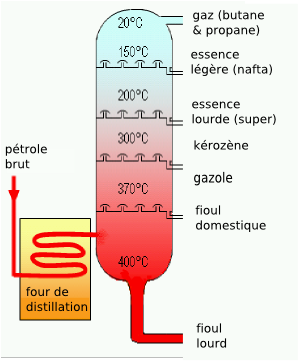
b. distillation of oil (Physical Change)

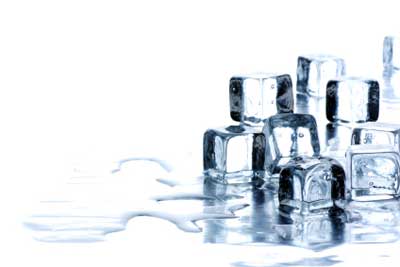
c. formation of ice (physical)

d. leaves changing color (chemical)

Properties that indicate a chemical change:
Colour, odour, solubility, phase
A similar lab found on YouTube:
Identify the following as physical or chemical change
a. burning wood (Chemical Change)

b. distillation of oil (Physical Change)
c. formation of ice (physical)
d. leaves changing color (chemical)

Properties that indicate a chemical change:
Colour, odour, solubility, phase
A similar lab found on YouTube:
Matter
What is matter?
Matter, the stuff from which our physical world is formed, presents to us as various types of material. On a first analysis, the possible phases are:
-gaseous, such as air
-liquid, such as water
-solid, such as rock
However, for classification purposes it is useful to divide materials into:

State of Matter

Matter, the stuff from which our physical world is formed, presents to us as various types of material. On a first analysis, the possible phases are:
-gaseous, such as air
-liquid, such as water
-solid, such as rock
However, for classification purposes it is useful to divide materials into:
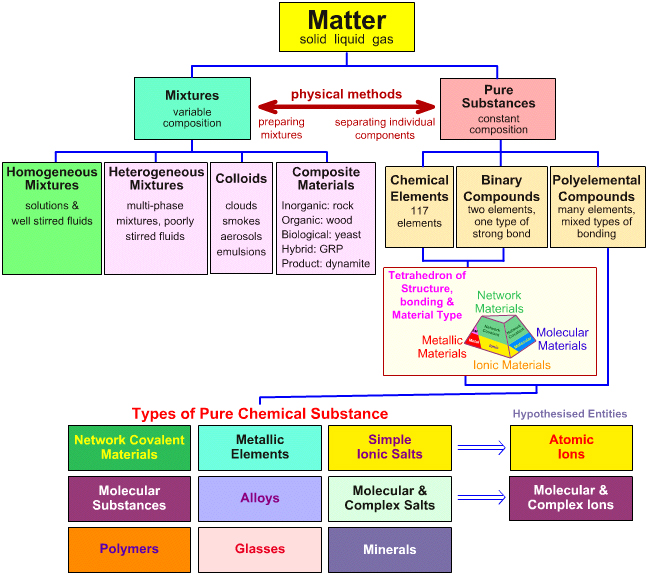
Here is the chart of matter:
- mixtures: variable composition
- pure substances: stoichiometric composition
There are 2 kinds of changes
1. Physical change
2. Chemical change
What are the differences between these two?
A physical change is a change in which no new substance is formed, for example, freezing water into ice just results in water molecules which are 'stuck' together - it's still H2O;
 |
| ice melting |
A chemical change results in the formation of one or more new substances, for example,burning wood results in ash, carbon dioxide, etc, all new substances which weren't there when you started.
 |
| wood burning |
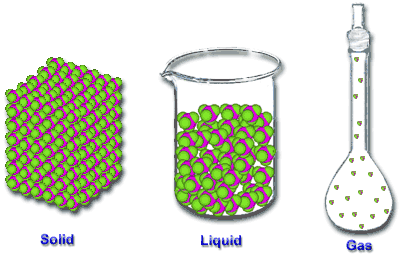
Solid - the particles (ions, atoms or molecules) are packed closely together. The forces between particles are strong enough so that the particles cannot move freely but can only vibrate. As a result, a solid has a stable, definite shape, and a definite volume. Solids can only change their shape by force, as when broken or cut.
Liquid - it is a nearly incompressible fluid which is able to conform to the shape of its container but retains a (nearly) constant volume independent of pressure. The volume is definite if the temperature and pressure are constant.
Gas - it is a compressible fluid. Not only will a gas conform to the shape of its container but it will also expand to fill the container.
Unit Conversions Review
A test on Unit Conversions is scheduled on Monday September 27. The following are some problems that are quite difficult.
Review Problems:
1. A crazy Klingon warrior eats 50 strips of dog meat for breakfast. Each dog can produce 34 strips of meat. Each strip weights 5g.
a. How many kilograms of meat do four crazy Klingon's eat for breakfast in one week?
4 klingon x 50 strips of dog meat = 200 strips/day
5 g x 200 strips = 1000g/day
1000g x 7 days = 7000g = 7kg
b. How many dogs get eaten by one Klingon per week?
50 strips of dog meat x 7 days = 350 strips of dog meat
350 strips of dog meat x 1 dog / 34 strips of meat = 10.29411765 (Round up) = 10.3 dogs
2. Convert 28.4 g/mL into kilograms per litre
28.4 g/1 ml x 1 kg/10^3 g x .001 ml/1 L=28.4 kg/L
3. Convert 872 cm ^3 into cubic meters.
872 cm^2 x 1 m^3/10^6cm^3=872 x 10^-6m^3=8.72 x 10^-4 m^3
4. (1234 km/1 hr) x (1 hr/3600 s) x (1 s/.001 ms) x (10^3 m/1 km) x (10^2 cm/1 m) = 34.3 cm/ms = 3.43 x 10^1 cm/ms
A good online unit conversion site: http://www.onlineconversion.com/
Unit Conversion video: http://www.youtube.com/watch?v=w0nqd_HXHPQ
(Beware of the boring monotone in the video above Dx)
Review Problems:
1. A crazy Klingon warrior eats 50 strips of dog meat for breakfast. Each dog can produce 34 strips of meat. Each strip weights 5g.
a. How many kilograms of meat do four crazy Klingon's eat for breakfast in one week?
4 klingon x 50 strips of dog meat = 200 strips/day
5 g x 200 strips = 1000g/day
1000g x 7 days = 7000g = 7kg
b. How many dogs get eaten by one Klingon per week?
50 strips of dog meat x 7 days = 350 strips of dog meat
350 strips of dog meat x 1 dog / 34 strips of meat = 10.29411765 (Round up) = 10.3 dogs
2. Convert 28.4 g/mL into kilograms per litre
28.4 g/1 ml x 1 kg/10^3 g x .001 ml/1 L=28.4 kg/L
3. Convert 872 cm ^3 into cubic meters.
872 cm^2 x 1 m^3/10^6cm^3=872 x 10^-6m^3=8.72 x 10^-4 m^3
4. (1234 km/1 hr) x (1 hr/3600 s) x (1 s/.001 ms) x (10^3 m/1 km) x (10^2 cm/1 m) = 34.3 cm/ms = 3.43 x 10^1 cm/ms
A good online unit conversion site: http://www.onlineconversion.com/
Unit Conversion video: http://www.youtube.com/watch?v=w0nqd_HXHPQ
(Beware of the boring monotone in the video above Dx)
Scientific Notation, with a pinch of Unitary Rates.

- used to describe very large or very small numbers using powers of 10.
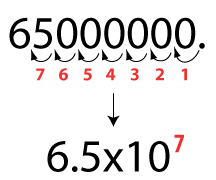

 A few extra examples:
 1. 4.5 X 10^3 = 4500
2. 6.9 X 10^6 = 6900000 3. 3.4 X 10^5= 340000
4. 8.4 X 10^9 = 8400000000 Convert from standard form to scientific notation: 1. 0.000000789 = 7.89 X 10^-8
2. 3400000 = 3.4 X 10^6
Convert from Scientific notation to standard form: 1. 6.4 X 10^8 = 640000000
2. 7.3 X 10^4 = 73000
To convert, from Scientific notation to standard form, in a calculator: 6.4 (EXP) 8
or 6.4 (EE) 8
6.4 (x10^)8
A problem to do, with your calculator: 1. (8 X 10^-6) - (4 X 10^-8) = 7.96 X 10^-6
2. (3.28 X 10^-5) X (5.47 X 10^9) = 1.7942 X 10^5
A good YouTube link that shows scientific notation in detailhttp://www.youtube.com/watch?v=0Dd-y_apbRw
Unitary Rates-If 1m=100 cm1m^2=10000cm^21m^3=10 X 10^6 cm^3
-Convert: 4.3 dm^2 to Gm
dm -> m -> Gm
10^2 dm^2=1m^2
10^18 m^2=1Gm^2
4.3 X 10^-20 Gm^2

Subscribe to:
Posts (Atom)